Mistletoe extract has more human trial data behind it than almost anything else in integrative oncology, and the evidence is unusually specific about what it does and does not do. That specificity is the reason it is worth writing about carefully rather than enthusiastically.
The short version, before the detail. Replicated randomized evidence for quality of life and for cancer-related fatigue during treatment, including a guideline endorsement from a body affiliated with mainstream oncology. No evidence for extending survival. Both halves of that are true and this page states both.
Treatments
Mistletoe Therapy
Mistletoe extract has replicated randomized trial evidence for improving quality of life and reducing cancer-related fatigue during treatment, including a Society for Integrative Oncology guideline endorsed by ASCO for quality of life in breast cancer. It does not have evidence for extending survival.
What is mistletoe therapy?
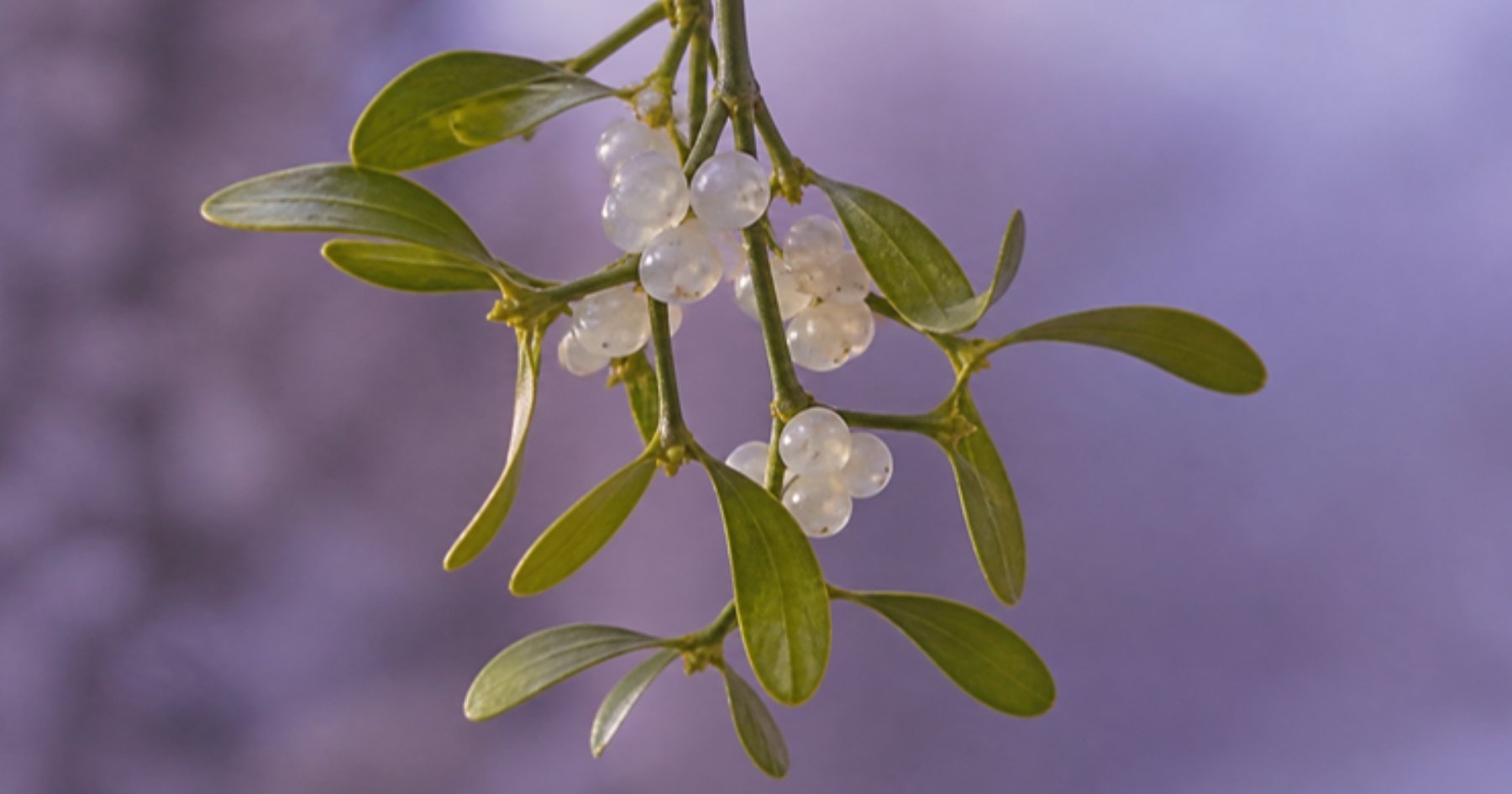
Mistletoe therapy uses an extract of Viscum album, the European mistletoe, prepared as an injectable and administered most often subcutaneously, sometimes intravenously. It has been used in European oncology since the 1920s and is prescribed widely in Germany and Switzerland alongside conventional cancer treatment.
A typical course involves injections two to three times weekly over an extended period, with dose escalated gradually while the response at the injection site is monitored. It is a course of therapy rather than a single administration.
What does the research actually show?
This is the section this page exists for.
Immune activity. Much of the interest in mistletoe comes from its effects on the immune system. In a 2023 review of perioperative randomized trials, two trials in colorectal cancer reported beneficial effects on immune cells, specifically natural killer cells. Those are measures of immune activity; what the trials found for survival is set out below.
Quality of life: replicated positive evidence
A 2020 systematic review and meta-analysis covering 26 publications and 30 datasets found a pooled effect on global quality of life of d = 0.61, with a 95% confidence interval of 0.41 to 0.81. The authors are explicit that most included studies carry a high risk of bias, and equally explicit that much of that bias is inherent to blinding an injectable therapy that produces a visible local skin reaction. That is a fair reading of a real methodological problem rather than an excuse for one.
A separate meta-analysis published in 2023 examining breast cancer patients specifically found a comparable pooled standardized mean difference of 0.61, with a confidence interval of 0.47 to 0.75, across nine randomized trials. The authors rated the certainty of that evidence as moderate and traced its risk of bias mainly to the difficulty of blinding.
Fatigue: a moderate effect, usefully calibrated
A meta-analysis of 12 randomized controlled trials covering 1,494 participants found a standardized mean difference of -0.48 for cancer-related fatigue, with a 95% confidence interval of -0.82 to -0.14. Most of those studies carried a high risk of bias, and the authors call for more placebo-controlled trials to confirm the result.
The authors described the size of that effect as moderate and comparable to the effect of physical activity. That comparison is more useful than an abstract number, because most people already have some sense of what exercise does for fatigue and no sense at all of what a standardized mean difference of 0.48 feels like.
Guideline status
An evidence review published in 2022 notes that a Society for Integrative Oncology guideline, endorsed by the American Society of Clinical Oncology, supports add-on Viscum album for health-related quality of life in breast cancer. The same review reports good evidence for health-related quality of life and survival in pancreatic cancer, a signal that has not been confirmed across other tumor types and should not be generalized.
Survival: no evidence
A 2023 systematic review and meta-analysis of seven perioperative randomized controlled trials found no difference from control for mortality (risk ratio 1.00, 95% confidence interval 0.79 to 1.27) or for recurrence (risk ratio 1.03, 95% confidence interval 0.79 to 1.33).
A German health technology assessment examining mistletoe in breast cancer found quality of life improvements ranging from small to moderate, and noted that because of the high risk of bias in the studies, the difference may not be caused by mistletoe. One small study found no effect on progression-free survival at five years, and studies on overall survival are lacking.
Mistletoe extract is not a treatment for cancer and we do not offer it as one.
What are the side effects?
The most common effect is a local skin reaction at the injection site: redness, swelling, warmth, sometimes itching. The German health technology assessment recorded these in a median 25% of patients. It is an expected response rather than an adverse event, and dose is titrated against it.
Less commonly reported: low-grade fever, chills, fatigue on the day of injection, and headache. Allergic reactions are rare and are the reason a first dose is given under observation.
Who is not a candidate?
Mistletoe is not right for everyone. A known allergy to Viscum album preparations, an active infection with fever, and pregnancy or breastfeeding rule it out, and other conditions are assessed individually at screening. A course does not begin until a diagnosis is established.
How does it fit with other treatment?
Mistletoe is studied predominantly as an add-on therapy, which is the context most of the evidence above comes from. It does not require you to be receiving conventional treatment, and it does not require you to stop.
If you are receiving chemotherapy or radiation, timing is managed and the schedule is set around your cycles rather than through them. We need to know what you are receiving so we can do that, and we are happy to work with your oncologist.
What does a course involve here?
Screening first: diagnosis confirmed, medication and supplement reconciliation, relevant laboratory work, and review of the conditions above that can rule mistletoe out. The first dose is administered under observation.
From there, your schedule is set with you. Many courses run two to three times weekly, with the dose raised gradually and the injection-site response reviewed at intervals. If injections are given at home, you are trained first and receive written administration instructions, storage guidance, and a description of which reactions are expected and which warrant a call.
Ask us for the cost of the full course before you begin, not visit by visit.
Schedule an evaluation appointment with Mitogenesis
Curious whether mistletoe therapy fits your care plan? Contact Dr. Mel at 480-781-4800 to book a consultation.
FAQs
For quality of life and cancer-related fatigue during cancer treatment, replicated randomized evidence says yes, with a pooled effect size around 0.61 for quality of life and a moderate effect on fatigue. For extending survival, the evidence says no: a 2023 systematic review of perioperative randomized trials found no difference from control for mortality or recurrence.
It is used as an add-on during cancer treatment to support quality of life and reduce cancer-related fatigue. It is not a treatment for cancer itself and we do not offer it as one.
Mitogenesis provides mistletoe therapy in Scottsdale, Arizona, serving the greater Phoenix area. A comprehensive evaluation and screening is required before a first dose, which is administered under observation.
Cost depends on preparation, dose and course length. Mitogenesis is fee-for-service and does not bill insurance, so ask us for the cost of the full course before you begin.
The most common is a local skin reaction at the injection site, recorded in a median 25% of patients in a German health technology assessment. It is an expected response and dose is titrated against it. Less common: low-grade fever, chills, fatigue on the day of injection, headache. Allergic reactions are rare.
A Society for Integrative Oncology guideline endorsed by the American Society of Clinical Oncology supports add-on Viscum album for health-related quality of life in breast cancer. That is a guideline recommendation for a specific supportive purpose in a specific population, not an approval of mistletoe as a cancer treatment.
Most of the evidence comes from studies where it was given alongside conventional treatment. Timing is scheduled around infusion cycles, and we need your full medication list to screen for interactions.
An intravenous route is used in some protocols, typically alongside subcutaneous administration rather than instead of it. Most of the randomized evidence described above studied subcutaneous administration, so the two routes should not be assumed to carry the same evidence.
Disclaimer: The information in this article is provided for informational purposes only and is not a substitute for the advice of your physician or other health care professional. Do not use the information to diagnose or treat a health problem or disease. Always consult with a healthcare professional before taking any medication or nutritional, herbal or homeopathic supplement, or using any treatment for a health problem.
Before you start
How should you evaluate a practice offering mistletoe?
Ask what it is expected to do and what it is not. A practice that answers only the first half has told you something incomplete.
Ask which preparation they use and why. Ask what the local skin reaction means and how dose is adjusted against it. Ask what happens if you have a reaction at home, and get that answer before the first self-administered dose rather than after.
The same three questions work here as anywhere: what has been studied, in whom, and what did it show.